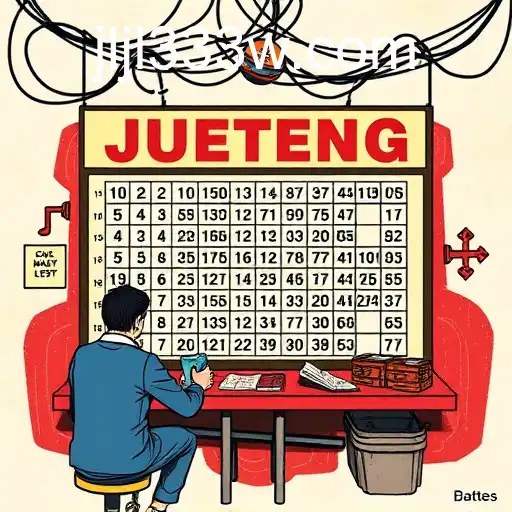
Jueteng: A Persistent Underground Lottery
Jueteng is a notorious numbers game that has entrenched itself in the socio-economic fabric of the Philippines. Despite being illegal, it thrives across the archipelago, drawing participants from various socio-economic backgrounds. The game is simple in its mechanics but complex in its societal implications.
Understanding Jueteng
The mechanics of Jueteng are straightforward. Players select a combination of numbers, typically from 1 to 37, and place their bets. The winning numbers are drawn randomly, with players relying on luck for their chance at substantial cash prizes. Despite its simplicity, Jueteng is a game with deep-rooted implications, both socially and politically.
In many communities, Jueteng serves as a form of entertainment and an opportunity for quick financial gain. Its pervasive presence is attributed to the low-entry costs and the allure of high rewards. This accessibility makes it popular, particularly among lower-income individuals who view it as a temporary escape from financial hardship.
The Societal Impact
Jueteng's impact extends beyond its immediate financial allure. It has become a significant issue in regions where local economies are struggling. The illegal nature of the game leads to a shadow economy that operates parallel to legitimate fiscal systems, undermining local governance and economic stability.
Moreover, Jueteng often thrives due to corruption at different levels of government. Law enforcement agencies frequently turn a blind eye or are complicit in its operations, allowing organizers to operate with near impunity. This complicity erodes public trust in legal institutions and perpetuates a cycle of illegality and corruption.
Different administrations have grappled with the challenge of Jueteng. Some attempts have been made to legalize and regulate similar forms of gaming, such as the Philippine Charity Sweepstakes Office's (PCSO) Small Town Lottery (STL), yet Jueteng continues to outpace these efforts due to its deep community roots and perceived better odds and payout structure.
Political Implications
Jueteng doesn't merely disrupt local economies but also influences political dynamics. In some areas, Jueteng operators wield considerable influence, forging relationships with politicians and using proceeds to sway elections and local governance.
The game's operators often establish themselves as community leaders, providing resources and employment opportunities as a way to garner influence. This positions them in a way that enables them to mobilize communities during elections, effectively turning a significant part of the electorate into a block vote.
The intertwining of Jueteng with politics has created scenarios where elected officials owe their positions, in part, to the efforts of Jueteng lords. This relationship compromises the officials' ability to impartially govern and may lead them to prioritize the interests of Jueteng operators over those of their constituents.
The Challenges of Eradication
Efforts to eradicate Jueteng have consistently been met with challenges. Enforcement is hindered by the very nature of the game—its operations are adaptable, often moving between different locations to evade law enforcement. The deep-rooted cultural acceptance of Jueteng as a norm also presents a significant barrier to eradication.
To curb the spread of Jueteng, some have argued for the need to focus on dismantling the network of corruption that supports it. Tackling the financial incentives that Jueteng provides to both players and operators is crucial. This could involve providing alternative livelihood programs to communities heavily reliant on Jueteng for economic activity.
In recent years, technology has emerged as both a challenge and a tool in the fight against Jueteng. While mobile technologies have allowed Jueteng operations to become more decentralized and harder to track, these same technologies offer new mechanisms for surveillance and data-driven approaches to law enforcement.
Conclusion
Jueteng remains a complex issue in the Philippines, deeply entwined with social, economic, and political threads. While the draw of quick financial gain ensures its continuity, addressing the underlying issues such as poverty and corruption is essential.
The persistence of Jueteng highlights the challenges faced by the authorities in eradicating it completely. A multi-faceted approach, focusing on governance reform, socio-economic development, and community engagement, is imperative to making a significant impact against this illegal numbers game. Ultimately, the story of Jueteng serves as a reminder of the intricate relationship between legality, culture, and livelihood in society.